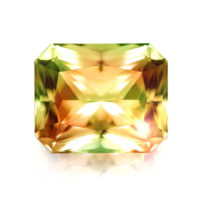
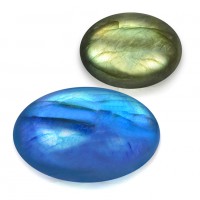
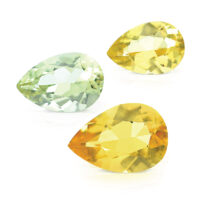
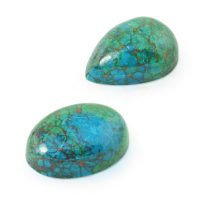
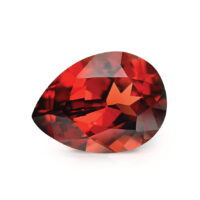
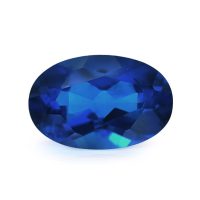
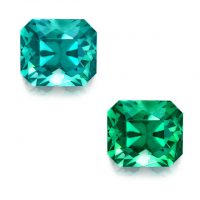
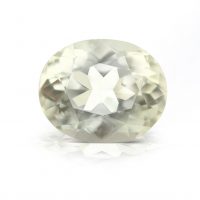
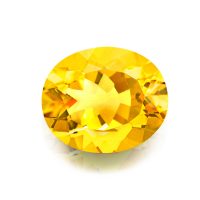
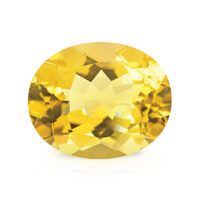
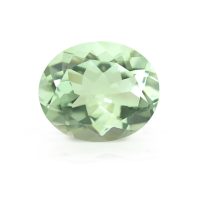
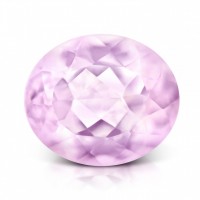
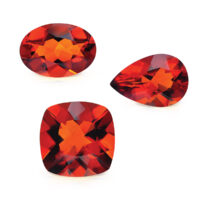
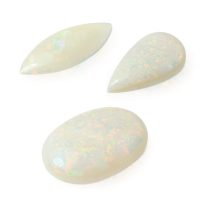
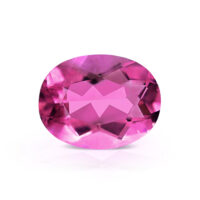
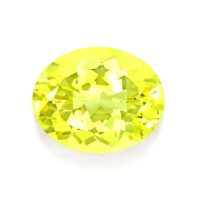
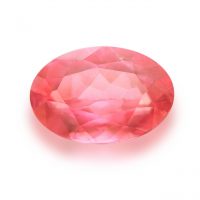
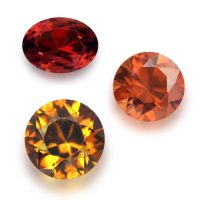
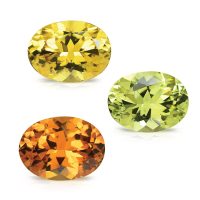
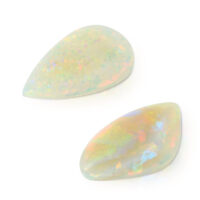
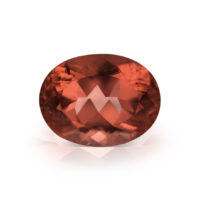
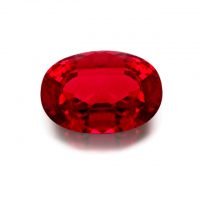
A Brazilian twist on a legendarily popular gem often associated with Mexico, Brazilian Fire Opal comes from the Opal fields of Pedro II (Pedro Segundo, named for the last Brazilian Emperor) in Piauí state (pee‑ah‑WEE). Vaulted for nearly 30 years, these Fire Opals are from the long‑closed Orion Gems Mining Exploration. Rare and beautiful, Brazilian Fire Opal’s fiery, natural citrus hues and high clarity are key to its value. Now only sporadically mined, Brazilian Fire Opal is past its peak, leaving these scarce gems highly prized by aficionados.
Hardness 5.5 – 6.5
Refractive Index 1.370 – 1.470
Relative Density 1.92 – 2.38
Enhancement None
Beauty
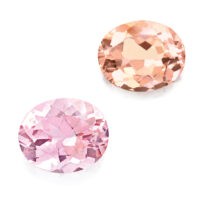
While Brazilian Fire Opal doesn’t have the dancing colors usually associated with Opals, its radiant beauty comes from its unique, fiery orangish‑yellow hues, with desirable medium to medium‑light saturation (strength of color) and tone (lightness or darkness of color), plus excellent brilliance. Color is Fire Opal’s most important consideration — while most gemstones occur in blues, greens, and reds, vibrant oranges and yellows remain exceptionally limited.
With Brazilian Fire Opal’s innate beauty dependent on optimal lapidary, each crystal was expertly faceted in the legendary Indian gemstone city of Jaipur, home to some of the world’s finest cutters, and renowned for its master lapidaries. Each gem was carefully oriented to maximize colorful brilliance, achieving a mirror‑like polish (accentuating its vitreous glassy luster), an attractive overall appearance (outline, profile, proportions, and shape), and eye‑clean clarity — the highest clarity grade for colored gemstones, as determined by leading gemological laboratories.
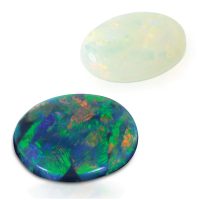
Opal, an October birthstone, derives from the Greek ‘opallios’, meaning “to see a change.” Comprised of silica and water — the main component in glass — Opal forms when silica under the earth mixes with water to create a silica solution. If this solution fills voids or is trapped in layers underground, Opal begins to form. The structure of Opals is unique, comprised of microscopic silicon dioxide spheres (1,500 – 3,500 angstroms in diameter; 1 angstrom is one ten‑millionth of a millimeter) that form a pyramid‑shaped grid, interspersed with three to six percent water. It’s the refraction of light through these spheres and the gaps between them that produces Opals’ characteristic play‑of‑color. Opal without play‑of‑color has its silicon dioxide spheres more randomly arranged. Fire Opal (or Sun Opal) is aptly named for its transparent to semi‑translucent oranges, reds, and yellows, appearing across light to dark saturations and tones, with vivid orange and red gems the rarest and most valuable. Treasured in the Americas since the time of the Aztecs, Fire Opals were once called ‘quetzalitzlipyollitli’, meaning “gemstone of the bird of paradise.” Coveted by the Aztecs as symbols of intense love, these radiant gems were believed to have emerged from the primordial waters of creation. Both the Aztecs and the Mayas used Opal from the Americas in mosaics and for ritualistic purposes, though most of these mines were only rediscovered in the 19th Century.
Rarity
Extremely rare, particularly in fine gemmy qualities, Fire Opal is mainly mined in Mexico, but it also comes from Brazil, Ethiopia, Mali, Tanzania, and occasionally Australia. Opal has been mined in the Brazilian states of Pará, Piauí, Rio Grande do Sul, and Rondônia since the mid‑1930s, but extraction has always been very limited, making regular supply difficult to secure.
Historically, Orion Gems Mining Exploration was the primary commercial source of Brazilian Fire Opal. With our rough crystals acquired around 1998, Orion Gems Mining Exploration is no longer active, with references dating to the late 1990s – 2000s. The mine was located in the northeastern Brazilian state of Piauí, in the Pedro II region near Buriti dos Montes, home to Brazil’s most important Opal deposits. Pedro II (Pedro Segundo, named for the last Brazilian Emperor, Don Pedro Segundo) is primarily an agricultural region around 700 meters above sea level, with a cool climate. Discovered in the 1930s, by the early 1980s almost 70 percent of the region’s Opal mines had closed. From the state capital, Teresina, the mine was about 200 kilometers on a paved road, followed by another 50 kilometers on a grueling dirt track. Orion Gems Mining Exploration was considered an ethical and ecological miner, not utilizing chemicals during extraction and ensuring waterways and the environment remained unpolluted. Current activity in Pedro II is small‑scale artisanal, with limited mining continuing under different operators.
Sourced from Opal seams between the host‑rock sedimentary layers, cut yields are a very low 8 percent, compared to the usual gem mineral return of 20 – 35 percent, impacting availability and scarcity. Importantly, our Brazilian Fire Opals are totally natural and unenhanced, accentuating desirability, rarity, and value.
Durability & Care
Their colorful brilliance aside, Brazilian Fire Opals are also coveted for their relative hardness and stability, a key consideration for a gem containing 3 – 6 percent water. A popular jewelry gemstone suitable for regular wear with appropriate care, Brazilian Fire Opal (Mohs hardness: 5.5 – 6.5) should always be stored carefully to avoid scuffs and scratches. Clean with gentle soap and lukewarm water, scrubbing behind the gem with a very soft toothbrush as necessary. After cleaning, pat dry with a soft towel or chamois cloth.
Map Location

Click map to enlarge